Medical Deep-dive
The following blog post was written by Daniel for a pediatric pulmonary hypertension facebook group. During our journey we sought out companionship and medical expertise through FB groups. These groups were truly a wealth of knowledge. The purpose of this post was to share back information that might be helpful to other parents. These groups often had survivors bias, so I hope someone feels less alone by hearing our story.
One major note, since writing this we have confirmed via biopsy that Owen did indeed have ACD, alveolar capillary dysplasia. We later learned that Owen’s initial genetic test failed to identify this mutation, as it was found in the regulatory region versus the exome. We had to make the decision without this information, which ultimately led to 6 extra weeks of suffering yet also beautiful time spent with our son.
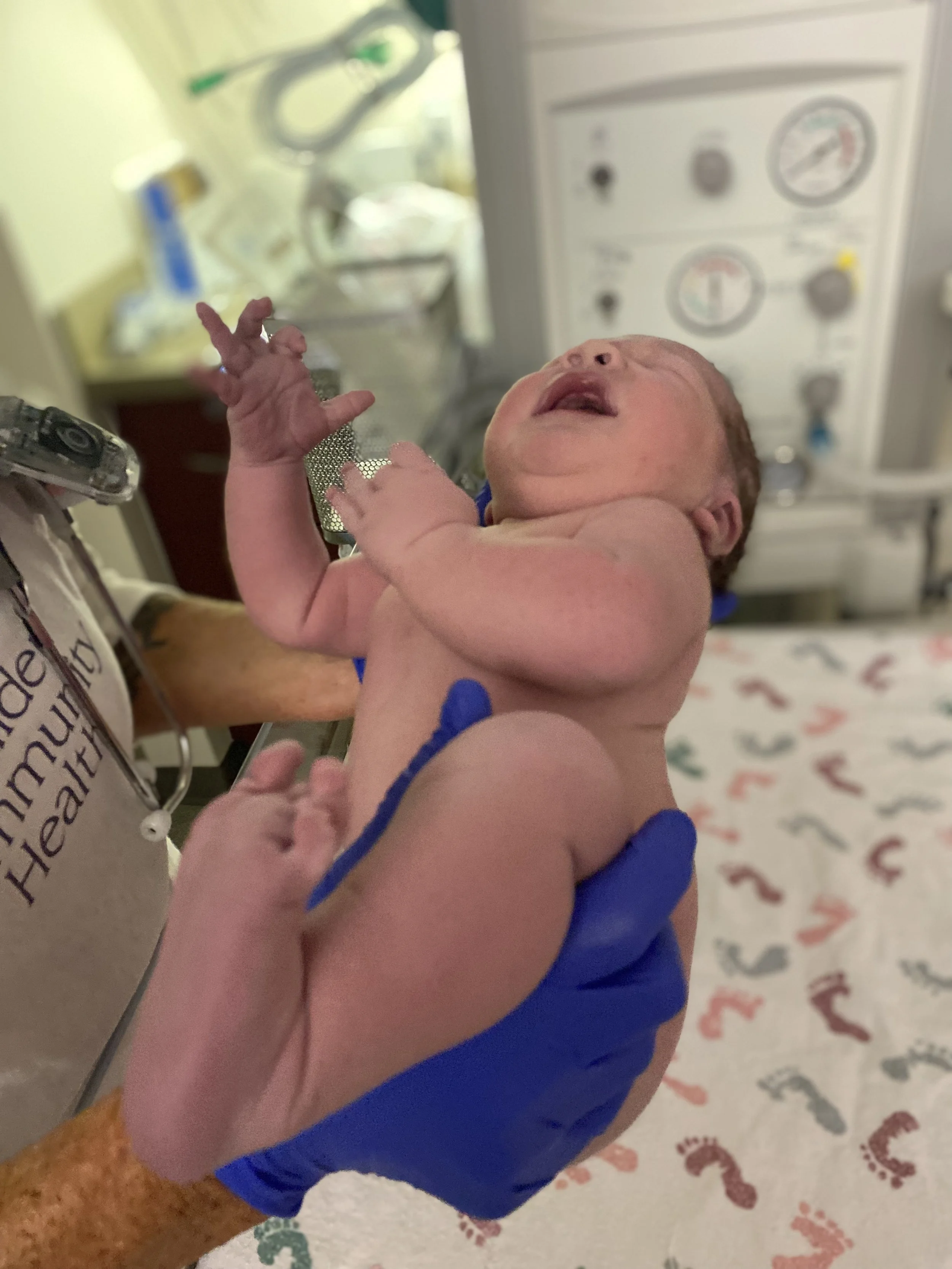
Owen at 2 minutes old
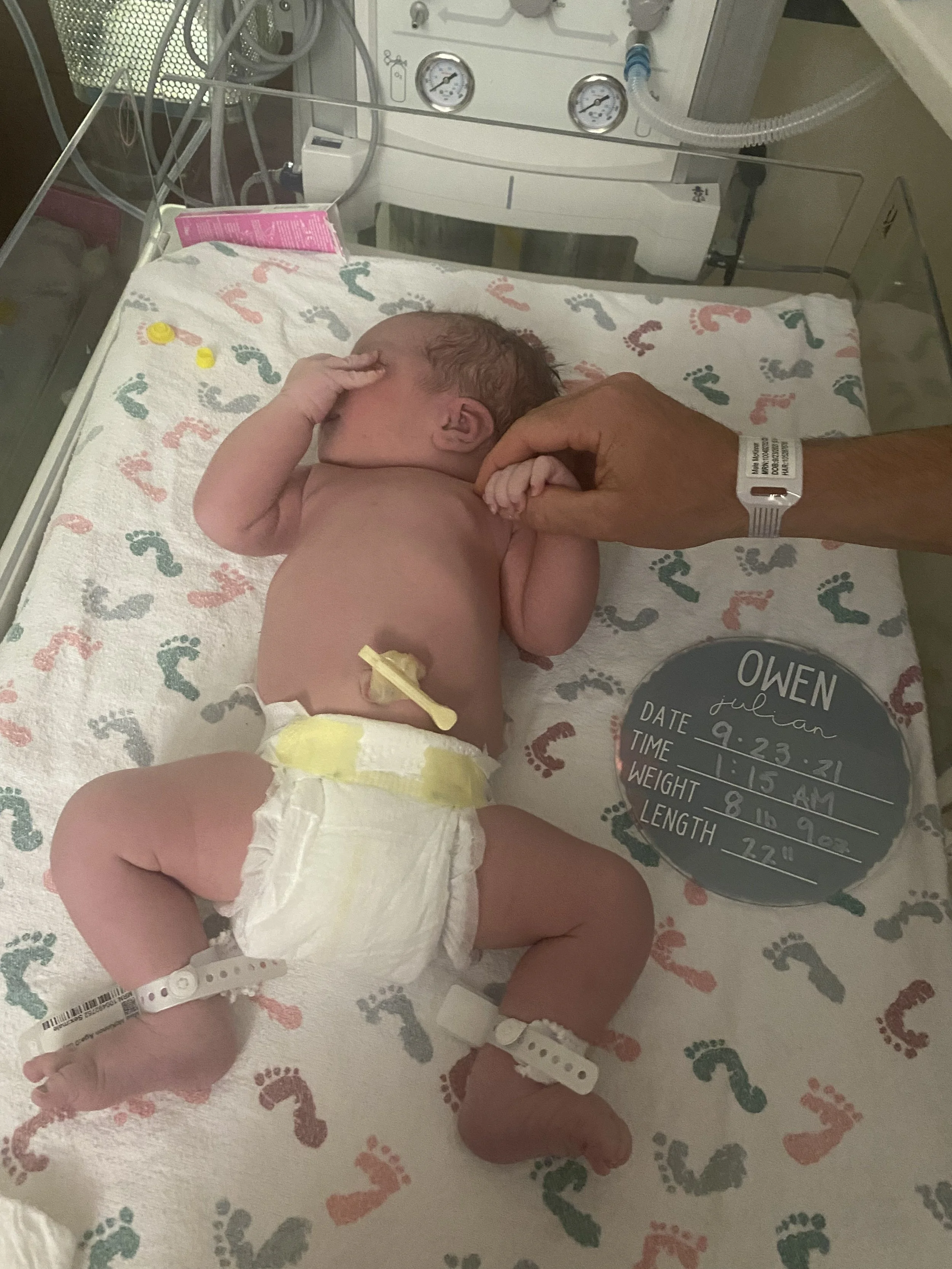
Our son Owen was born big and apparently healthy exactly on his due date. The only hiccup from conception to delivery was that he arrived too fast to get in both rounds of GBS-preventative antibiotics.
Roughly 4 hours after birth, one of the nurses noticed that he seemed to be having trouble breathing. What we as first-time parents thought were cute baby snores were actually grunts signaling distress. We moved him out of our room and into the nursery to begin oxygen through a cannula and measured his oxygen saturation. While we were terrified, the nurses assured us that this was very normal for deliveries at high altitude.
But something was not normal. The pulse oximeter was reading too low (in the mid-80s if I recall correctly). How could such a healthy looking baby not be saturating his blood? Over the next 18 hours, his condition deteriorated. We experimented with helmets, cannulas, heat lamps, IV fluids, and every other trick available to a level II NICU but could not get his saturations up. Shortly after one day of life, his levels crashed and the NP on staff made an executive decision to intubate him and call the Children's Colorado transport team.
At this point, we were in shock. Our beautiful little baby boy had a plastic tube jammed down his throat that I assumed would lead to certain death (didn't all Covid patients that got intubated die?). However, his sats stabilized and the Children's transport team arrived and assured us that everything would be ok.
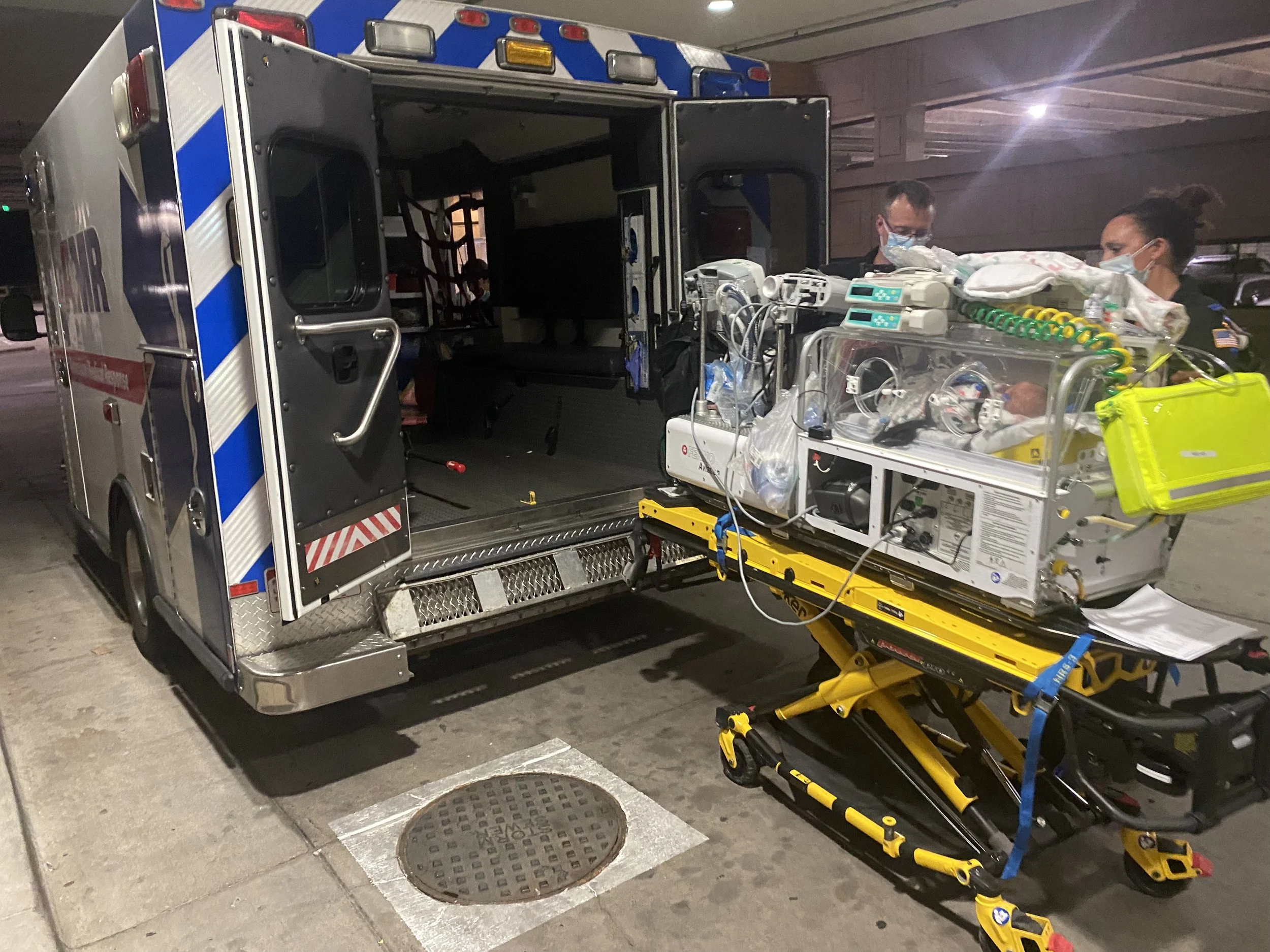
Owen in the NICU on wheels
We heard the same message when we arrived at the hospital an hour later ("This is not an emergency. He is safe here."). This period was a bit of a blur, but I believe by that time, we connected two pulse oximeters and identified pulmonary hypertension as the source of Owen's breathing difficulties. The fellow on duty that night walked us through the anatomy of the heart and lungs and explained what was going on. She reassured us that PPHN is quite common and treatable and we would be ready to start treatment as soon as Owen got an echocardiogram confirming solid heart function.
The echo arrived early the next morning and showed a perfect heart. We were elated. The team started Owen on iNO immediately afterward. I remembered hearing that he responded, but at that point, my understanding of his condition was super limited and I was still in shock from even being at Children's.
Over the next few days, the team was perplexed by why Owen had pulmonary hypertension. We all know about MAS, CDH, GBS pneumonia, and so on, but he didn't seem to have any of these problems. I was starting to get worried until one day his chest x-ray looked cloudy and we all came to the ex post facto conclusion that the PH must have been caused by the pneumonia.
Fortunately, the fine folks at the community hospital had already started antibiotics, so there was nothing to do but wait. The attending physician assured us every morning that "all full-term infants survive pneumonia" as we all watched the white clouds in his chest turn black (eliminate the transient atelectasis in medical speak). However, his PH did not disappear with the white clouds.
At this point (~7 days of life), the PH team got involved and suggested a short course of steroids and adding oral sildenafil to his iNO. This treatment began on Friday. On Saturday, Owen's condition seemed to deteriorate. On Sunday, it certainly did. We routinely saw him split 20-30 and drop his pre-ductal saturations to the 80s, requiring frequent vent adjustments to bring him back up (100% O2 boosts were not uncommon).
Monday morning, he crashed. As a new team began rounding, his split widened to 30 and his pre-ductal saturations fell into the 60s. The new attending (John Kinsella, the father of iNO therapy for PPHN and a tremendous human with whom I would recommend anyone entrust their baby's care) turned all the knobs to 11 (iNO to 80 ppm, O2 to 100%, vent setting to max, etc.). Owen didn't respond. He pulled the alarm and the ECMO team rushed in.
At this point, we were beyond terrified. ECMO? We had read that this was for really sick kids (Owen just had pneumonia, right?) and the outcomes were really not good (this is actually not true; 88% of kids on ECMO <7 days for PH survive). In the midst of the emergency, we pulled aside another physician and asked if we should actually be doing this. Would we just be subjecting Owen to more torture in the hospital? She assured us that, yes, she would recommend cannulation and that she has never met any parents that regretted putting a child on ECMO.
We proceeded with the surgery. ECMO was a bridge we were told. We didn't quite know what was wrong with Owen and ECMO would give us time to find out (or at least give us time to say goodbye).
Seeing him in his hospital warmer after the surgery was surreal. Owen's cute little body was burdened with two giant plastic tubes running into his neck and he required 24-hour attention from 2 nurses in addition to near-constant labs and monitoring. But he was alive and stable. For the moment, we didn't have to worry about crashing and splitting.
After a day or two on ECMO, Dr. Kinsella sat down with us and let us know that he thought that Owen had ACD, a rare, terminal lung disease that causes pulmonary hypertension because the pulmonary vasculature never formed correctly. We sent samples to Rady Genomics in San Diego for full-exome sequencing to check for defects in FOXF1 and other PH-implicated genes (there were ~350 in total) to confirm a diagnosis before removing support. In the meantime, we enrolled Owen in an organ donation program and had our parents come out to both meet him and say goodbye.
Except... The genetics results came back the day before Owen was scheduled to give up his kidneys and showed no gene mutations associated with PH. This in and of itself wasn't totally surprising because only ~50% of ACD cases do, but it did prompt us to schedule one last echo to confirm suprasystemic pulmonary pressures.
And the echo showed a miracle. Flow across both the PFO and PDA was left-to-right. Owen seemed to have started to recover over the course of the week he was on ECMO.
We promptly canceled the organ donation and got back to work treating his PH. We restarted sildenafil only to stop it again a day or two later after seeing no or possibly even a negative effect (some of these PH meds drop systemic pressures more than pulmonary pressures for some patients, which we suspected was happening for Owen). We then started him on Bosenten (2 mg/kg every 12 hours) and Remodulin (1 ng/kg/min ramping up 1 every 12 hours until 50) and waited for the PH to subside.
And waited. And waited. ECMO starts to get uglier and uglier as time goes on. After 1 week, the survival rate for PH kids is 88%. After 2 weeks, it drops to 50%. After 3 weeks, 25%. Despite ramping meds, Owen's echo showed no improvement. We seemed to be stuck. He was comfortable on ECMO but we were making no progress on the underlying condition. I was quite frustrated.
However, after 2.5 weeks on ECMO, he developed an MSSA infection. These are essentially impossible to clear while cannulated, so we scheduled a separation surgery not knowing whether we would be able to survive without the support yet knowing that he would die if we didn't clear the infection.
The surgery went great. If anything, his sats improved. His blood gases showed that he was ventilating beautifully, but an echo taken shortly after separation showed no change to his pulmonary hypertension.
We continued to ramp his remodulin, but at this point, it became clear that we probably weren't going to reverse his PH. Our goal changed to figuring out how we could get him home and give him a chance to outgrow it over the course of years. If we got him extubated, off iNO, and down to a reasonable O2 flow rate and placed a stent in his PDA, we could give him a relatively normal life.
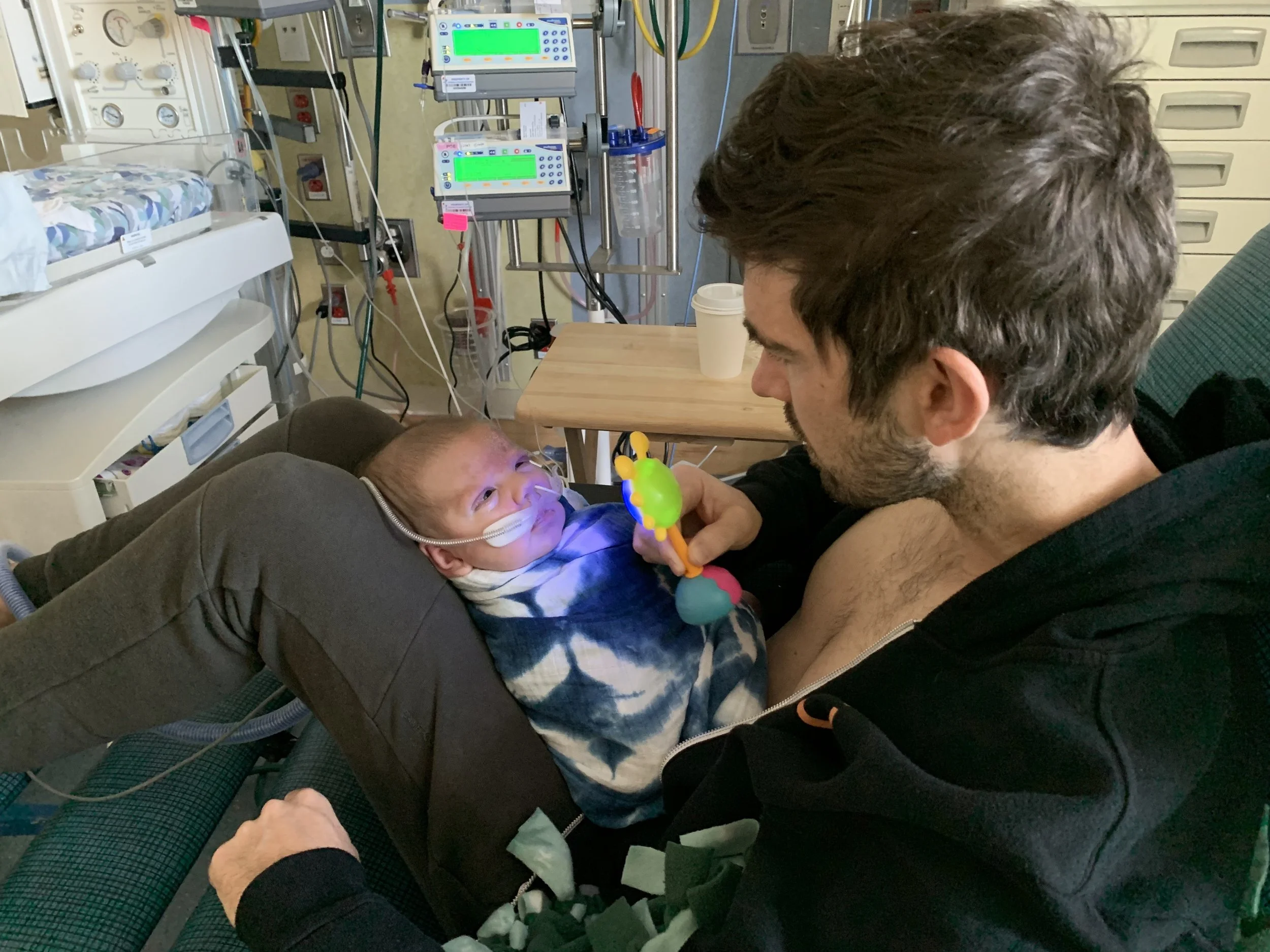
Roughly a week after ditching his ECMO machine, we extubated him to a high-flow cannula (5 L/min, ~60% O2) without a problem. As before, he almost seemed to do better with less support. For several days after extubation, he was maintaining pre- and post-ductal sats in the high 90s and showing almost no splitting. And without the breathing tube, we could hold him whenever we wanted and give him some approximation of a normal baby life. We were elated.
Unfortunately, our elation didn't last. After successfully weaning his flow down to 4 L/min, his breathing became labored and he could barely hang on at 9 L/min with 100% O2 until he was able to wean back down to 3 L/min over the course of the next week as the remodulin ramped up to 50. Were the drugs finally working?
Alas, if they were, his lung disease was progressing just as fast. His echos remained unchanged and a third attempt to introduce sildenafil failed. He started having a lot of difficulty getting rid of fluids and swelled up a like a watermelon. We treated his edema with diuretics, but these diuretics required treating him with salts that can cause edema. We began treating the treatments.
At six weeks in, the PH team let us know that they believed that Owen had a previosuly unseen lung disease with both ACD- and PVOD-like characteristics. We modified our goals again from surviving his disease to surviving the trip home to begin hospice.
The path was similar and required us first to wean off iNO. I was sure that this inhaled gas wasn't doing anything based on a few other experiments we had run, but boy did Owen tell me I was wrong when we tried to take it away. Owen handled the drop from 20 ppm to 10 or even 5 like a champ, but at 0, Owen immediately crashed and gave us our first experience with real air hunger. Unfortunately, this medecine that could only be administered in the hospital seemed necessary for his survival.
We were in the worst pickle parents could possibly imagine. Owen was seemingly comfortable and happy in the hospital, but we were highly (but not 100%) confident that he could not survive outside. Some of the more aggressive doctors suggested a long-shot plan to continue to ramp remodulin, introduce sildenafil for a 4th time, and experiment with an adult PH drug called riociguat for a perhaps 50% chance of getting him off iNO and 10% chance of him making it to 5 years old, but we were not comfortable with giving Owen a life plagued by hospital visits and drug side effects. Alongside the palliative care team and half the PH team, we elected to withdraw support.
This was an extremely hard decision, but I knew that it was the right one the second we disconnected him from his pumps and set him free from that cube that had been his prison for the 8 weeks that he was with us on this world. He passed peacefully in his mother's arms atop the helipad overlooking Denver.
Two days later as I write this, I am even more confident in our decision to withdraw support even without a firm diagnosis. His progression from perfectly healthy-looking baby to swollen-eyes-calling-for-help was invisible when we were in the hospital but totally clear as we looked through our pictures yesterday. In addition, he left this world ~15 minutes after stopping his remodulin and iNO, which demonstrated how sick he really was and how far away the dream of room air lurked.
I will be leaving this group in the next few days (after I answer any questions people have about his course), but if you discover this post in coming months or years, feel free to get in touch. I would love nothing more than to support another family facing the same struggle.
Written by Daniel McKinnon on November 18, 2021
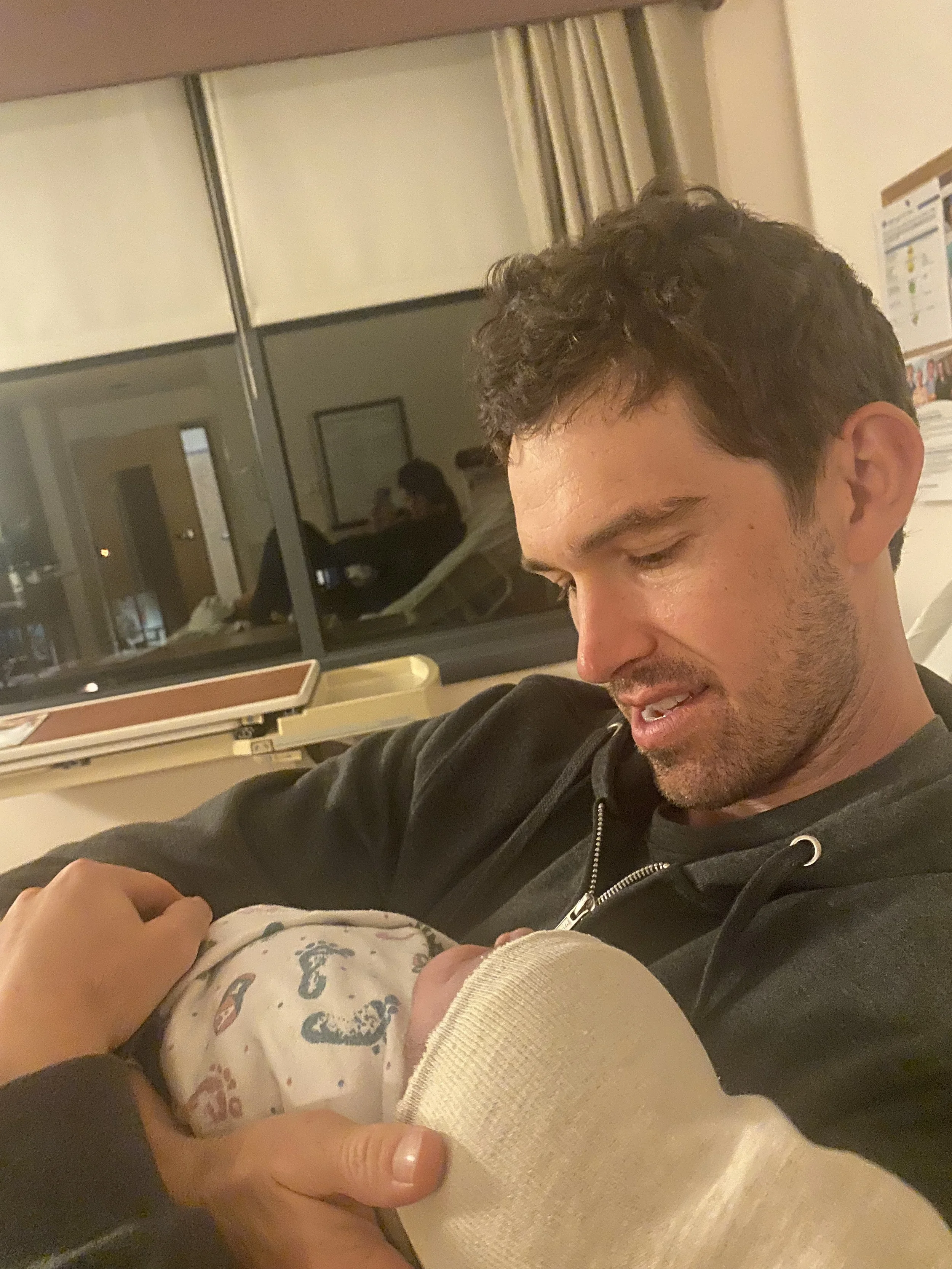
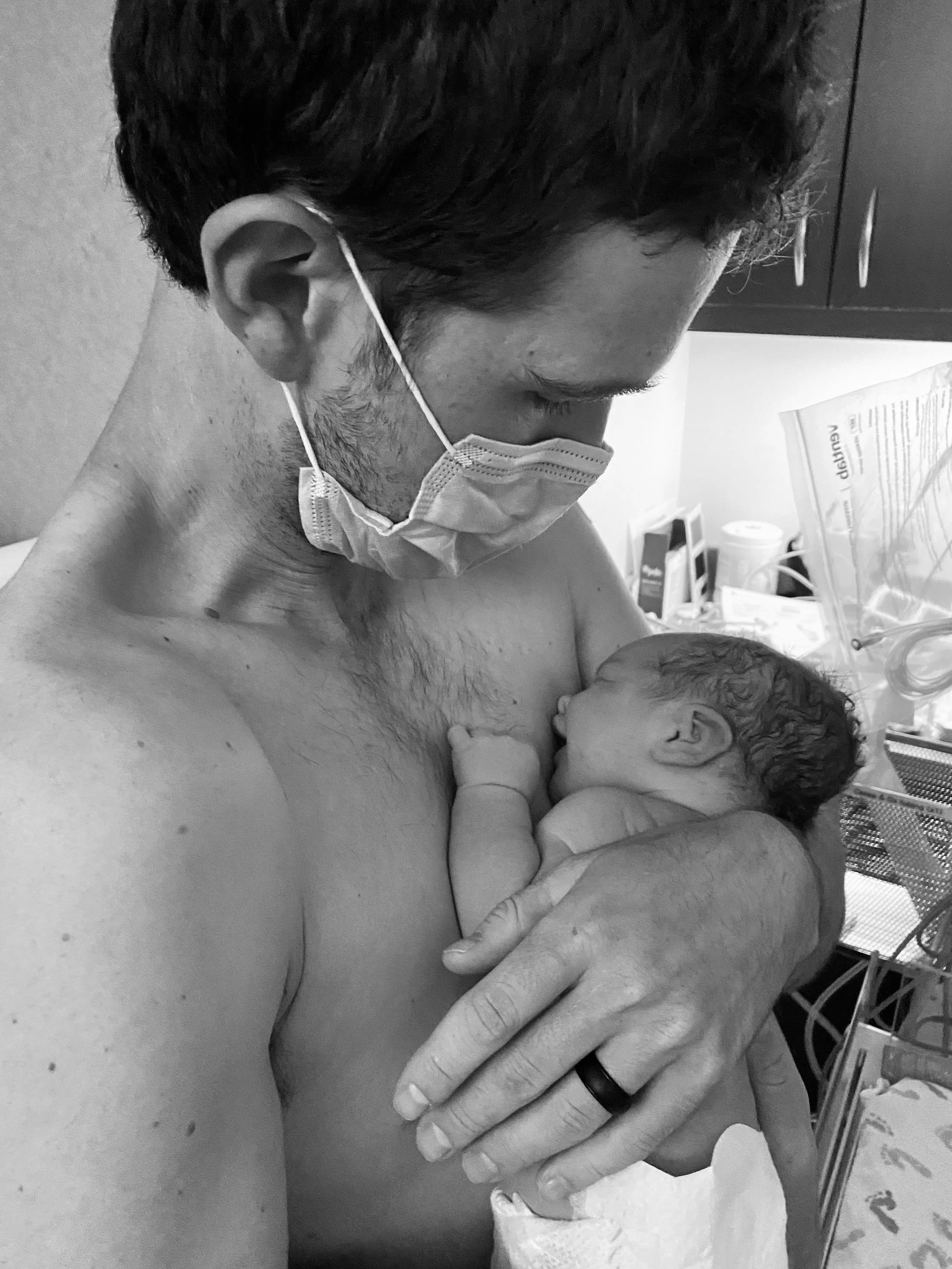
Daniel in few hours before Owen's breathing deteriorated.